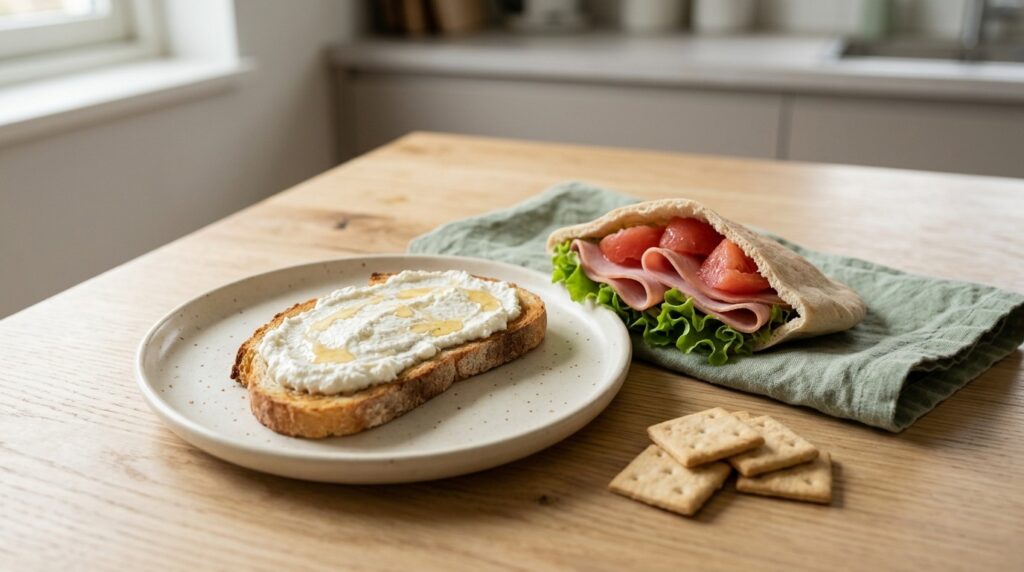
Yes, and almost all of it. White, whole grain, sourdough, baguette, pita and tortillas were all Phase 1 on my sheet. Only the bagel waited for Phase 2.
The bread was never the issue. What I spread on it was.
The fat math
A slice of bread, 30 g or so: about 1 g of fat, white or whole grain. A 50 g piece of baguette: about 1 g. A croissant: about 12 g, so that’s bread in name only.
Now the top layer. A tablespoon of butter: about 11 g. 30 g of low-fat cream cheese: about 4 or 5 g. 30 g of quark: close to 0. 2 slices of lean ham: about 1 g.
So a sourdough slice with quark and ham is around 2 g. The same slice with butter and cheddar is near 20 g, most of a strict day (20 to 30 g a day while I’m strict, 40 to 50 g once things have settled).
Which phase
Bread itself: Phase 1. Bagel: Phase 2, I think because of the density. Butter: Phase 2, “the less the better” is the literal note on my sheet.
Your gut may rank these differently. Try 1 kind at a time and keep your team informed.
How I actually eat it
Toasted sourdough with quark and honey for breakfast. A pita with lean ham, lettuce and peeled tomato for lunch. Crackers with cottage cheese when I need something at 4 pm.
Hummus on pita came later, because tahini is Phase 2 for me.
Questions people ask me
Whole grain or white bread with pancreatitis?
Both were Phase 1 for me, both about 1 g of fat a slice. I eat whole grain most days for the fibre, and white when my gut is unsettled and wants something plain.
Can I eat toast during a pancreatitis flare?
Dry toast was one of my flare foods: about 1 g of fat and nothing to digest around it. The butter stays in the fridge on those days.
Are bagels OK with pancreatitis?
On my sheet bagels are Phase 2, while every other bread is Phase 1. The fat is similar, about 1.5 to 2 g, but the dense dough sat heavier for me.
Read on
The full phase lists and the fat budget are in the book. For a plate that uses this: the healing chicken and vegetable soup. More answers like this one: all food questions.
Not medical advice. This page reflects one patient’s low-fat approach grounded in published guidance. Fat tolerance is individual. Check with your own healthcare team before changing your diet.