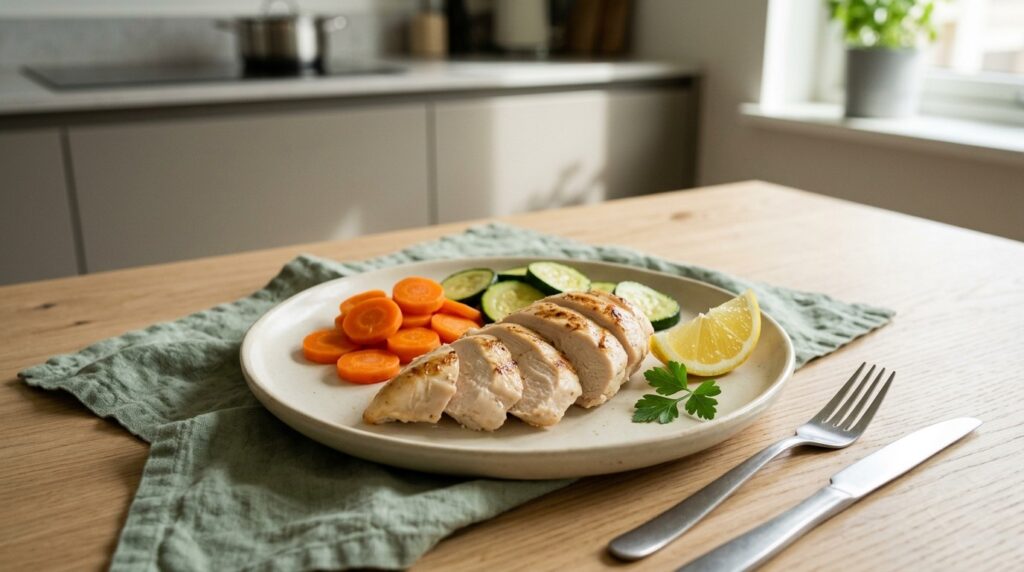
Yes. Skinless chicken breast was my main protein in Phase 1 and it still is on most days. Thighs and anything with the skin on waited for Phase 2.
The cut decides the answer. Chicken ranges from one of the leanest proteins you can buy to something that empties half your daily budget.
The fat math
100 g of cooked skinless breast: about 3.5 g of fat. Skinless thigh: about 9 g. Thigh with skin: about 15 g. A piece of fried chicken with breading: 20 g or more, before the fries.
My budget is 20 to 30 g a day while I’m strict, 40 to 50 g once things have settled. Breast fits in any phase. Thigh with skin is a Phase 2 decision I have to plan the rest of the day around.
Which phase
Breast, skinless: Phase 1. Thigh, skinless: Phase 2. Skin on: Phase 2, and only now and then.
That’s me. Your tolerance may sit somewhere else on that ladder. Keep a log and talk to your team.
How I actually eat it
Poached or baked breast with cumin, fresh herbs and lemon juice. Cumin is Phase 1 for me and does most of the work that pepper used to do. Paprika, black pepper, curry powder and chilli are all on my never list, so my spice rack looks empty to visitors.
In Phase 2 I grill skinless thighs with a few sprays of olive oil. They taste like chicken again, which the breast sometimes forgets to do.
Questions people ask me
Can I eat chicken skin with pancreatitis?
Chicken with skin is Phase 2 on my list and rare even then. Skin takes a thigh from about 9 g to about 15 g of fat per 100 g. In Phase 1 the skin always came off.
Is fried chicken OK with pancreatitis?
Not for me. A breaded, fried piece carries 20 g of fat or more, which is a whole strict day in one hand. Baked skinless breast is about 3.5 g per 100 g.
Can I have chicken soup with pancreatitis?
Yes, if the fat is skimmed. I cook skinless breast in the broth, chill it, lift the fat off the top and reheat. Carrots, celery and rice in it are all Phase 1 for me.
Read on
The full phase lists and the fat budget are in the book. For a plate that uses this: the healing chicken and vegetable soup. More answers like this one: all food questions.
Not medical advice. This page reflects one patient’s low-fat approach grounded in published guidance. Fat tolerance is individual. Check with your own healthcare team before changing your diet.