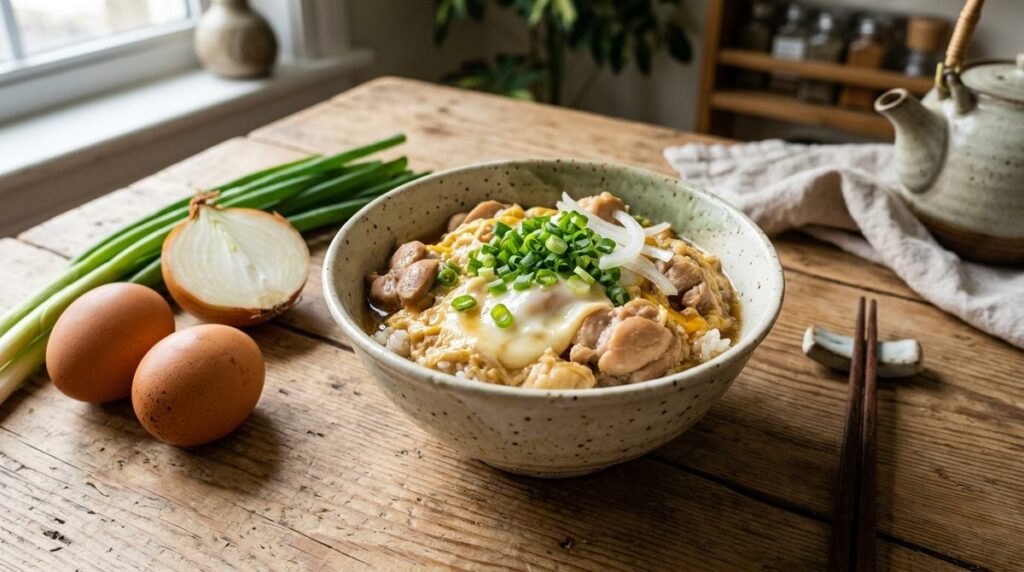
Oyakodon is chicken and egg simmered in a sweet-soy dashi and tipped over hot rice. Nothing fried. The classic uses mirin, which is a rice wine, so I leave it out and lift the sweetness with a little extra sugar. You still get that warm, savoury bowl that feels like proper comfort food.
A weeknight dinner I come back to constantly. Cheap, fast, gentle.
Serves 2. Roughly 10g fat and 545 kcal per serving.
Phase & care: Chicken breast and white rice are P1. I dropped the mirin (alcohol). Dashi and soy sit at P2 for me, cooked onion is P2, and 3 eggs across 2 bowls is about 1.5 each, which fits my P2 egg allowance but not my one-a-day P1 limit. So this is a phase-2 plate.
Ingredients
- 250g skinless chicken breast, sliced
- 1 onion, thinly sliced
- 200ml dashi
- 2 tbsp soy sauce, 1.5 tsp sugar (replacing the mirin)
- 3 eggs, lightly beaten
- 2 portions cooked rice
- Spring onion to finish
Method
- In a shallow pan, simmer the dashi, soy and sugar with the onion for 3-4 minutes.
- Add the chicken, simmer until cooked through, about 5 minutes.
- Pour the beaten egg over the top in a swirl. Cover and cook 1-2 minutes until the egg is just set but still soft. Don’t overcook it.
- Slide the whole thing over a bowl of hot rice. Top with spring onion.
The egg should be silky, only just set. Pull it off the heat while it still looks slightly underdone, it carries on cooking.
Stepan’s rule: When a recipe calls for a wine or spirit, check whether you actually need it. In oyakodon, a little extra sugar replaces the mirin and the alcohol question disappears.
More like this
Also low fat and easy on a sore pancreas: the chicken pho and the roasted beetroot and apple salad with lemon and dill. The full system, with the fat budget in grams and all 75 recipes, is in the book.
Not medical advice. This recipe reflects one patient’s low-fat approach grounded in published guidance. Fat tolerance is individual. Check with your own healthcare team before changing your diet.