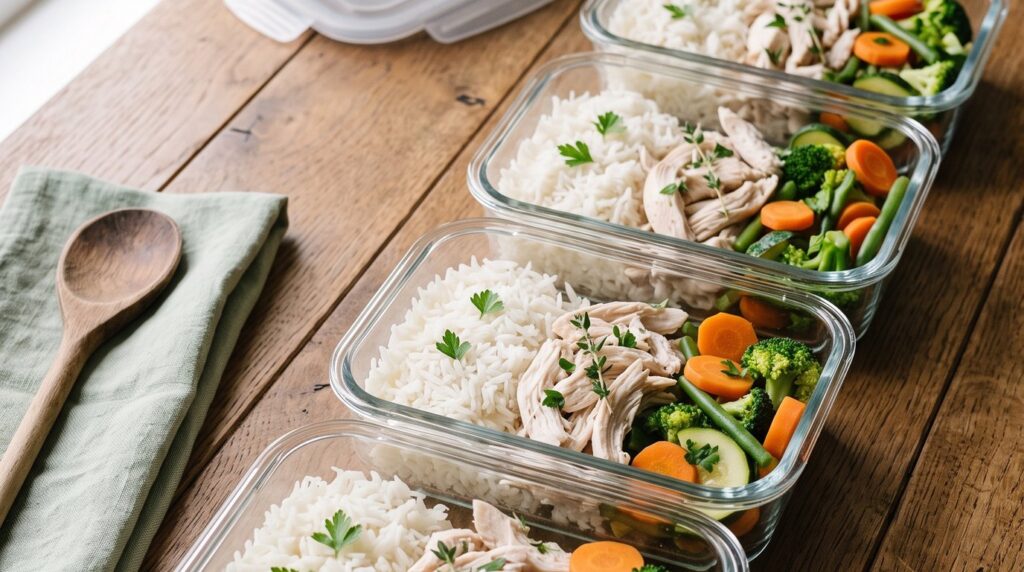
The most dangerous moment in this illness is not the dinner party or the holiday. It is the ordinary bad day when you are tired, in pain, and there is nothing safe in the house to eat, so you reach for whatever is quick and pay for it later. The fix is simple and it lives in your freezer. Cook once, on a good day, and let past-you feed present-you when present-you cannot cope. Here is the system.
Pick three or four freezer-friendly dishes. Soups, stews, dals, a chicken and rice tray bake, a batch of poached chicken and rice. Things that reheat without falling apart. Build the week around dishes you already trust.
Shop for the week, not the dish. Buy around what overlaps, the same carrots, onions, broth and rice feeding several recipes, so you are not buying odd ingredients for one meal. This is cheaper and faster.
Cook in parallel, not in sequence. Get the broth going, the rice on, the oven heating, and the lentils simmering at the same time. One afternoon, several dishes, instead of cooking every single night.
Portion before you freeze. Single or double portions in labelled containers or bags. Label every one with what it is and the date, because frozen soup all looks the same in three weeks. Lay bags flat to freeze so they stack.
Cool fully, then freeze. And here is the bonus, soups and stews chilled in the fridge before freezing let you lift the set fat off the top first (see the fat-skimming post), so your freezer meals are leaner than when they left the pot.
Stepan’s Rule: Stock the freezer when you feel good, eat from it when you feel bad. Recovery is not built on perfect days. It is built on having a safe meal ready for the day everything hurts.
The food-safety rules that keep this system from backfiring. Cool cooked food quickly, within about two hours, before it goes in the fridge or freezer, by using shallow containers or a cold-water bath. Fridge portions keep about 3 to 4 days, freezer portions about 3 months for best quality. Label with the date so nothing becomes a mystery. Reheat until piping hot all the way through, steaming, not just warm. And do not refreeze a meal you have already thawed and reheated. Thaw in the fridge, not on the counter. None of this is fussy, it is the difference between a safe stash and a stomach bug your gut cannot afford.
A phase note on the dishes above. Onions and lentils are phase 2 on my list, not phase 1. If you are still in the gentle phase, build the batch on poached chicken, white fish, plain rice and soft cooked vegetables, and bring the rest in when you have reintroduced them.
Keep a written list on the freezer door of what is in there and when you made it. When a bad day hits, you do not want to be standing in the cold trying to remember.
Patient experience, not medical advice.
The meal-planning approach and the recipes that batch well are mapped out in the book, built around exactly this idea of feeding yourself safely on the hard days.