Phase 2, and measured. Peanut butter is on my list, and so are peanuts, both at Phase 2. In Phase 1 the jar stayed closed.
It’s one of the easiest foods to overdo, because a “spoonful” is never a tablespoon.
The fat math
1 level tablespoon (about 16 g) of peanut butter: about 8 g of fat. 2 tablespoons: about 16 g. That’s over half a strict day (20 to 30 g a day while I’m strict, 40 to 50 g once things have settled) spread on 1 piece of toast.
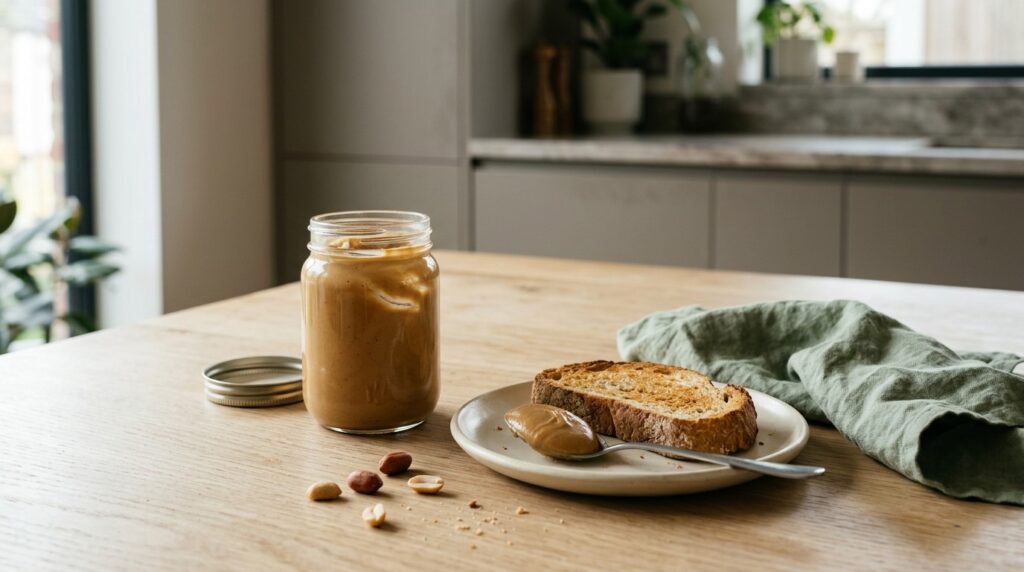
A heaped spoon straight from the jar is closer to 25 g of peanut butter, so about 12 g of fat. I weighed mine once. I’ve used a level spoon ever since.
Which phase
Phase 2 for me. The fat is the unsaturated kind, and that still counts; my pancreas doesn’t read labels.
Almond butter I’ve never used, so I can’t rate it. Your line may differ from mine either way. Test with a small amount and confirm with your team.
How I actually eat it
1 level tablespoon on toast, or stirred into a bowl of oats, as the fat for that meal. The rest of the meal stays near 0 g so the day still closes under budget.
I buy the kind with peanuts and salt only. The ones with added palm oil taste the same and carry a little more fat.
Questions people ask me
Can I eat peanut butter in Phase 1 of pancreatitis?
I didn’t. Peanut butter is Phase 2 on my list. At about 8 g of fat per level tablespoon it took too big a bite out of a 20 to 30 g day while I was still strict.
Is natural peanut butter better for pancreatitis?
The fat is about the same, around 8 g per tablespoon. I buy the version with peanuts and salt only because the ones with added palm oil carry slightly more. The main thing is the level spoon.
Can I eat almond butter with pancreatitis?
I’ve never used it, so I can’t give you my own verdict. Its fat per tablespoon is in the same range as peanut butter, so I’d treat it as Phase 2 and measure it.
Read on
The full phase lists and the fat budget are in the book. For a plate that uses this: the oatmeal with banana and cinnamon. More answers like this one: all food questions.
Not medical advice. This page reflects one patient’s low-fat approach grounded in published guidance. Fat tolerance is individual. Check with your own healthcare team before changing your diet.