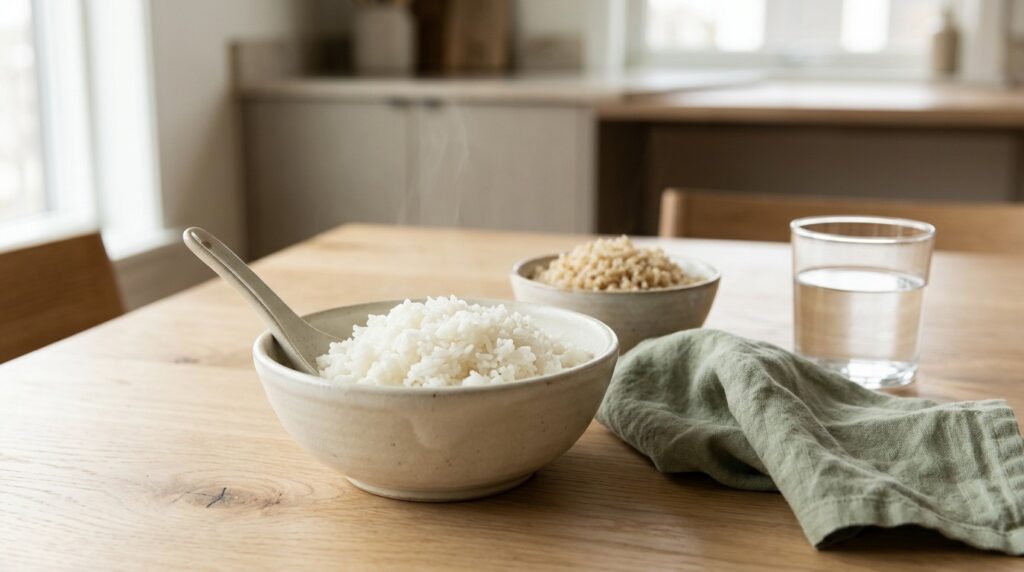
White rice is a Phase 1 food for me and a base I still cook 3 or 4 times a week. Brown rice waited until Phase 2.
Plain rice is about as safe as food gets with this condition. The trouble starts with what you do to it.
The fat math
A cup of cooked white rice (about 185 g) has around 0.4 g of fat. Brown rice, about 1.8 g. Both are rounding errors next to my budget (20 to 30 g a day while I’m strict, 40 to 50 g once things have settled).
Fried rice is where the numbers flip. 1 tablespoon of oil is about 14 g. A takeaway portion with egg and oil can clear 20 g before the chicken even lands on it.
Which phase
White: Phase 1. Brown: Phase 2, because the bran and the fibre sat heavy on my stomach early on.
Tolerances differ. Some people do fine with brown rice from day 1. I didn’t. Try it yourself and tell your team what you find.
How I actually eat it
Steamed jasmine or basmati. On top: poached cod or skinless chicken breast (both Phase 1), a few drops of good bio soy sauce, lemon juice, fresh parsley or cilantro. No pepper, no chilli, no curry powder; all 3 are on my never list.
On a flare day I cook rice soft in extra water, almost a porridge, and eat it warm with a little salt. Boring. Works.
Questions people ask me
Brown rice or white rice with pancreatitis?
White first. It was Phase 1 for me and carries about 0.4 g of fat a cup. Brown rice is only about 1.8 g, but the fibre sat heavy on my stomach, so it waited for Phase 2.
Can I eat fried rice with pancreatitis?
The rice is fine, the oil is the problem. 1 tablespoon is about 14 g of fat, and a takeaway portion can pass 20 g. I make a dry version at home with cooking spray in Phase 2.
Is rice good during a pancreatitis flare?
Soft white rice cooked in extra water was one of my flare-day foods: near 0 g of fat, warm and easy. Confirm with your team if you’re acute.
Read on
The full phase lists and the fat budget are in the book. For a plate that uses this: the steamed cod with lemon and dill. More answers like this one: all food questions.
Not medical advice. This page reflects one patient’s low-fat approach grounded in published guidance. Fat tolerance is individual. Check with your own healthcare team before changing your diet.