Yes. Low-fat yogurt was on my Phase 1 list and I ate it nearly every day. Greek yogurt, low-fat and full-fat alike, is Phase 2 on my sheet.
Yogurt is one of those foods where the label does the deciding.
The fat math
A 150 g bowl of 1.5% yogurt: about 2 g of fat. The same bowl of 2% Greek yogurt: about 3 g. A 10% Greek yogurt: about 15 g, half a strict day (20 to 30 g a day while I’m strict, 40 to 50 g once things have settled) in one bowl that looks exactly like the healthy one.
Fruit yogurts add sugar; the fat stays the same. Still, I buy plain and add my own fruit, because the sweet ones made me feel worse in a way I can’t put a number on.
Which phase
Phase 1: plain low-fat yogurt. Phase 2: Greek, whichever fat level, and read the percentage every time.
Different gut, different line. Keep a log and talk to your team.
How I actually eat it
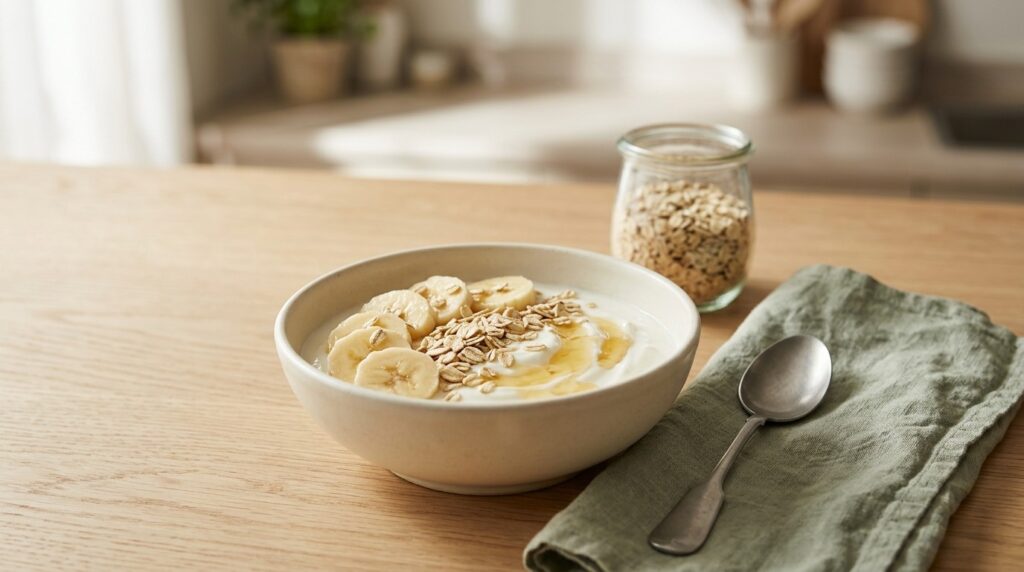
Morning bowl: 150 g low-fat yogurt, half a banana, a teaspoon of honey, a spoon of oats. All Phase 1 for me.
In Phase 2 I use low-fat Greek yogurt as my sour cream and half of my mayonnaise (my sheet says mayonnaise mixed with yogurt, and that’s what I do). Chia seeds go in sometimes, but they’re Phase 2 and I don’t push it.
Questions people ask me
Can I eat Greek yogurt in Phase 1 of pancreatitis?
I didn’t. Greek yogurt, even the low-fat kind, is Phase 2 on my list. In Phase 1 I stayed with plain 1.5% yogurt at about 2 g of fat per 150 g.
Is yogurt good for pancreatitis?
For me it was one of the easiest foods: soft, cold, about 2 g of fat per bowl when low-fat. I can’t make claims about probiotics; I ate it because it sat well.
What about flavoured fruit yogurt with pancreatitis?
The fat matches the plain version, the sugar doesn’t. I buy plain and add banana or peeled apple. The sweet ones made me feel worse, even if I can’t give you a gram figure for why.
Read on
The full phase lists and the fat budget are in the book. For a plate that uses this: the oatmeal with banana and cinnamon. More answers like this one: all food questions.
Not medical advice. This page reflects one patient’s low-fat approach grounded in published guidance. Fat tolerance is individual. Check with your own healthcare team before changing your diet.