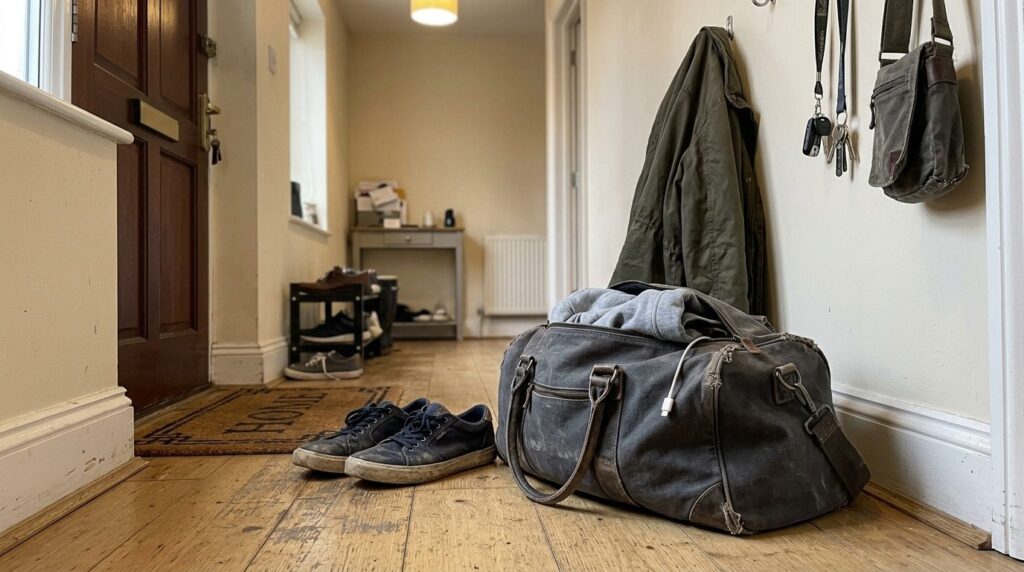
The second time I went in, I packed while doubled over on the bedroom floor. I brought three phone chargers, no underwear, and no list of my medications. My mom had to drive back home twice for what I forgot.
Now there’s a bag in the hall cupboard. It stays packed. I check it twice a year, same weekend I change the smoke alarm batteries.
The paper that matters most
One page, printed, in the front pocket. Not on your phone, because your phone will be at 4 percent and somebody else may be doing the talking.
On it: your name and date of birth, your diagnosis and dates of previous attacks, every medication with dose and timing including enzymes, your allergies, your usual pain relief and what has failed before, your GP and specialist names and numbers, and one emergency contact.
Update it whenever a dose changes. Mine lives as a document I reprint in under a minute.
Enzymes, and enough of them
Bring your own PERT, more than you think, in the original box with the label. Hospital pharmacies do not always stock your brand or your strength, and enzyme supply has been patchy in several countries into 2026. If your team wants you taking them, having your own on hand removes a delay.
Do not start or stop enzymes in hospital without telling the team. Just have them there.
The comfort items that are actually medical
- Lip balm. Days of nil by mouth or sipping leaves your lips wrecked.
- A long phone cable, one metre or more (about 3 feet). Hospital sockets are never near the bed.
- Earplugs and an eye mask. Sleep is part of recovery and wards are loud.
- Loose clothing with a soft waistband. Nothing that presses on your abdomen.
- Your own toothbrush, and a small unscented moisturiser.
What I deliberately leave out
Food. You will not be deciding what you eat for the first stretch, and a packet of biscuits in the locker is a temptation with no upside.
Anything valuable. Wards lose things.
A book you have to concentrate on. I bring something I can read in five minute pieces, because attention comes and goes.
The bit people skip
Tell someone where the bag is. Written on the fridge, or in a message thread, so the person driving you can grab it without asking questions you’re in no state to answer.
Stepan’s Rule: the version of you in pain at 3 AM makes bad decisions. Your job on a calm day is to leave that person as few decisions as possible.
I’m a patient sharing what worked for me. This is not medical advice, and if you’re in severe pain, get help rather than perfecting a packing list.
The book has the full printable version of the medication page, plus the flare protocol I run before deciding whether this is a hospital night. Get PancreasZen.