The guidelines now say feed people within 24 to 48 hours. Here is what that looked like from the bed, twice, in the same country.
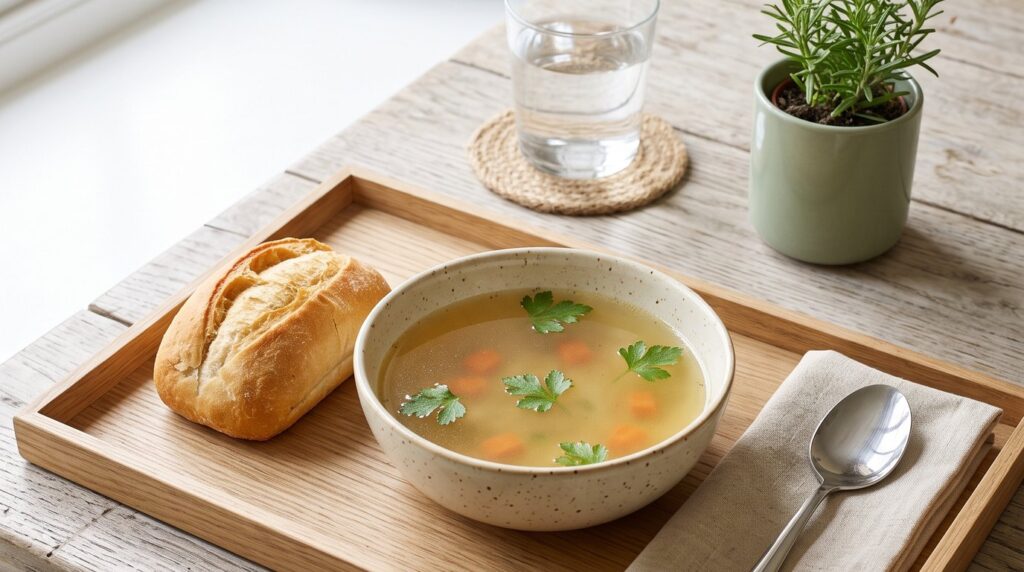
Zlin, November 2025: tea and water early, a Nutridrink on day three, the sip-feed bottle that is Ensure or Boost if you are reading this in the US, then my first clear broth on day four or five. Krnov, May 2023, the same diagnosis and the strict version of it: a Nutridrink on day three would have been unthinkable.
When that bottle arrived my first thought was that somebody had made a mistake. Everything I’d absorbed since 2023 said the pancreas needs rest, and rest means nothing by mouth.
Nobody had made a mistake. The advice had moved, and the second hospital had moved with it. Two and a half years, two Czech wards, and the gap between them is the thing nobody explains to you while you are lying in one of them.
What the evidence says now
A 2026 systematic review and network meta-analysis in Pancreatology pooled 23 randomized trials and 2,095 patients, comparing when and how people with acute pancreatitis were fed. Early oral nutrition came out best for overall mortality. Early enteral feeding, meaning into the gut through a tube when you can’t swallow, reduced multiple organ failure compared with delaying.
The older approach, keeping people nil by mouth for days and running nutrition through a vein, has been losing ground in guidelines for a while. This analysis puts more weight behind that.
Provisional flag, and it’s a real one: a network meta-analysis compares treatments that mostly were not tested against each other directly. It’s strong evidence for a direction, weaker evidence for any single ranking. And “early” varies between trials.
Why the gut argues for it
The reasoning doctors give is that a gut with nothing in it doesn’t stay neutral. The lining gets less well fed, and the theory is that this makes infection more likely later in the illness. Feeding into the gut keeps that barrier working. Feeding through a vein bypasses it entirely.
I’m summarizing a mechanism, not proving one. The trial outcomes are the part that counts.
What it feels like from the bed
Awful, at first. My stomach did not agree with the plan and I said so. What helped:
- Small volumes, often. Sips of broth every twenty minutes beat a full bowl in one go.
- Say what happens. Pain, nausea and bloating after eating are information your team needs, and reporting them is part of the job.
- Low fat from the very first spoonful. Clear broth, then thin soups, then plain carbohydrate. The chapter order in my book is basically this order, because it’s the order my gut accepted.
Nobody is testing your willpower. If your team pushes eating, it’s because the data now favours it.
After discharge is where it gets lonely
The hospital hands you back to yourself with a leaflet saying low fat. Nobody defines low fat in grams, and that gap is the reason I ended up writing a book. In my strict phase I work to 20 to 30 g of fat a day, settled phase 40 to 50 g. Those are the numbers I run my own life on, agreed with my own doctor, not a prescription for you.
Stepan’s Rule: the first meal after an attack is not a test you pass or fail. Sip, wait twenty minutes, report honestly. Slow and reported beats brave and silent.
I’m a patient, not a doctor. Feeding decisions during an admission belong to the team with your scans in front of them.
The first week back home is the hardest week to be alone with this. The PancreasZen community is patients who have already done that week. Come in and ask.