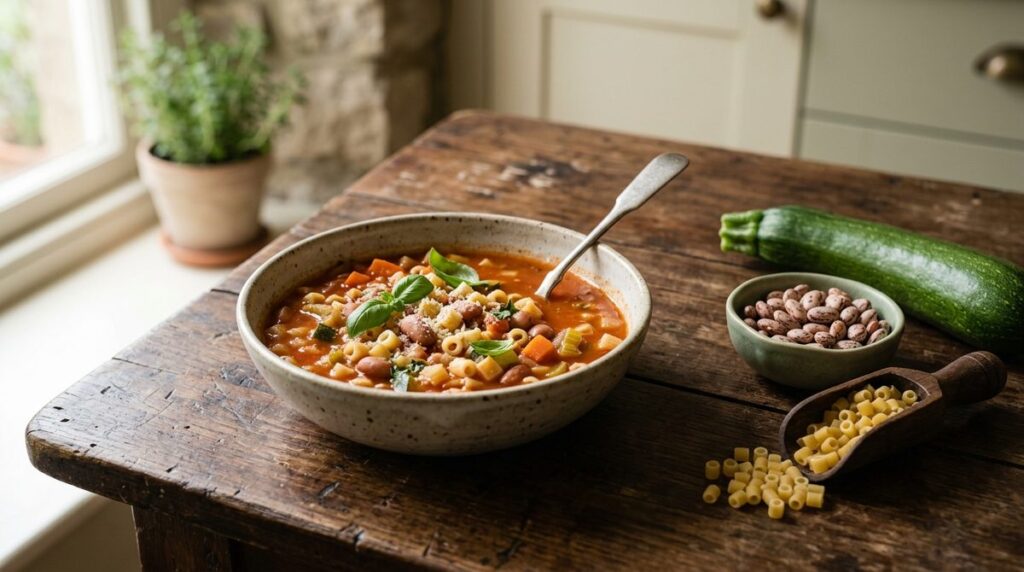
Minestrone usually starts by frying a soffritto in olive oil. That base is where a lot of the fat sneaks in. You can build the same depth by sweating the vegetables in a splash of broth instead, then letting time and tomato do the rest.
This is a one-pot starter that doubles as lunch for three days. It freezes well too.
Serves 6. Roughly 2g fat and 150 kcal per serving.
Phase & care: Carrot, celery and white pasta are P1. Cooked onion, green beans and borlotti are P2 for me (borlotti are the beans I digest best, which is why they’re here over cannellini). Courgette is fine with the skin and centre taken out. A P2 starter, so I’d hold it for once things have settled.
Ingredients
- 1 onion, 2 carrots, 2 celery sticks, all diced
- 1 courgette (peeled, centre removed), 100g green beans
- 1 carton passata (sieved tomato, no skin or seeds)
- 1 tin borlotti beans, drained
- 1.5 litres low-fat vegetable broth
- 60g small pasta
- Salt, fresh basil, a little dried oregano
Method
- Sweat the onion, carrot and celery in a few tablespoons of broth for 8 minutes, lid on, stirring. No oil.
- Add the passata, the rest of the broth and the oregano. Simmer 20 minutes.
- Add courgette, green beans and the borlotti. Simmer 10 minutes.
- Add the pasta, cook until just done. Add more broth if it tightens.
- Season with salt, finish with torn basil.
Season harder than you think. Without fat, salt and acid carry the soup, so taste and adjust at the end.
Stepan’s rule: When a recipe starts with “heat the oil and fry the onion,” try “sweat the onion in a splash of broth” instead. You lose the fat and keep the base.
More like this
Also low fat and easy on a sore pancreas: the spaghetti al pomodoro that doesn’t need olive oil and the oyakodon. The full system, with the fat budget in grams and all 75 recipes, is in the book.
Not medical advice. This recipe reflects one patient’s low-fat approach grounded in published guidance. Fat tolerance is individual. Check with your own healthcare team before changing your diet.