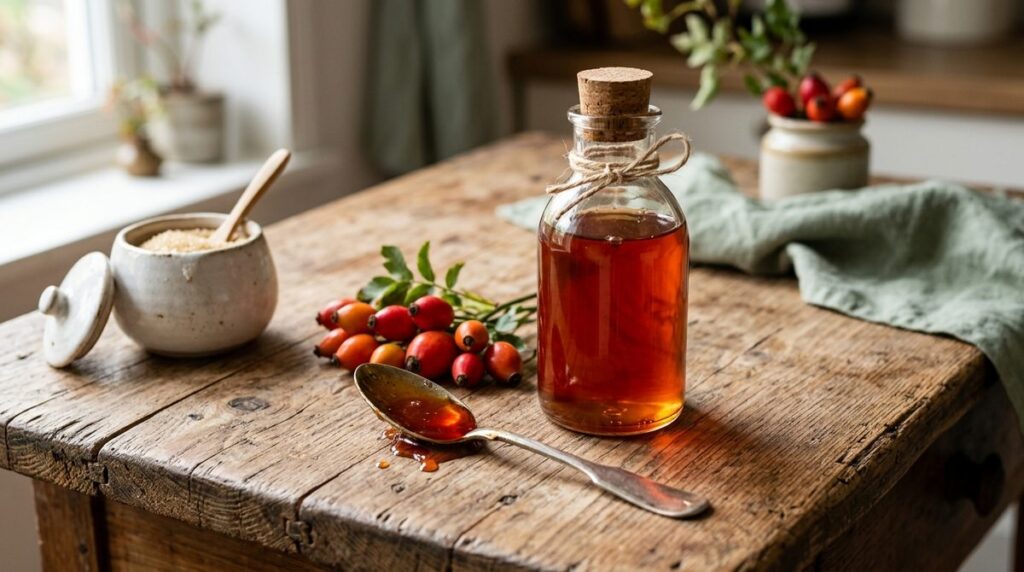
Rosehips (šípek) are the red fruit left on wild roses after the flowers drop, ripe from late summer into autumn. They’re tart, a little like cranberry, and the raw fruit is one of the richest natural sources of vitamin C there is. One honest caveat: boiling them into syrup drives a lot of that vitamin C off, so enjoy this for the flavour, not as a vitamin supplement. The syrup is a Central European classic for good reason. A spoonful in soda, over yogurt, or stirred into tea gives you something tart and warming with no fat.
It’s a nice counterweight to the floral elderflower and the hot ginger. Three syrups, three completely different drinks.
Makes about 700 ml. No fat, about 30 kcal a tablespoon.
Phase & care: Rosehips aren’t on my list, but they’re a gentle, tart fruit. Sugar is P2, so the same rule applies: a spoonful in a drink, not a mugful of syrup.
Prep 15 min · Cook 45 min · Total 1 h
Ingredients
- 500g ripe rosehips, topped and tailed, rinsed
- 1 litre water
- 350g sugar
Method
- Roughly chop or crush the rosehips. Simmer them in the water for about 30 minutes until soft.
- Mash, then strain through muslin. Strain a second time to catch the fine irritant hairs inside the hips, which you don’t want in the finished syrup. Strain patiently.
- Return the strained liquid to the pan with the sugar. Simmer until the sugar dissolves and it thickens slightly.
- Bottle in sterilised bottles. Keeps in the fridge several weeks.
Made this? Rate it.
Be one of the first to rate it.
Double-strain, properly, through muslin. The fine hairs inside rosehips are an irritant, and getting them all out is the one step you can’t skip.
Stepan’s rule: Tart fruit syrups give you flavour and acidity without fat. Acidity is half of what makes a drink taste “finished,” so a sharp syrup does a lot of work in a glass.
The fat budget behind every number here, with 75 tested low-fat recipes sorted by phase, is in the book. Get PancreasZen: the patient’s manual.
Not medical advice. This recipe reflects one patient’s low-fat approach grounded in published guidance. Fat tolerance is individual. Check with your own healthcare team before changing your diet.